
A Plant Compound Beat Milk Protein for Muscle in a Clinical Trial. So Why Did Nothing Else You Tried Work?
Most muscle supplements are engineered to sell, not to work. Here are the four reasons your stack does nothing, and the one ingredient with the human data to back it up.
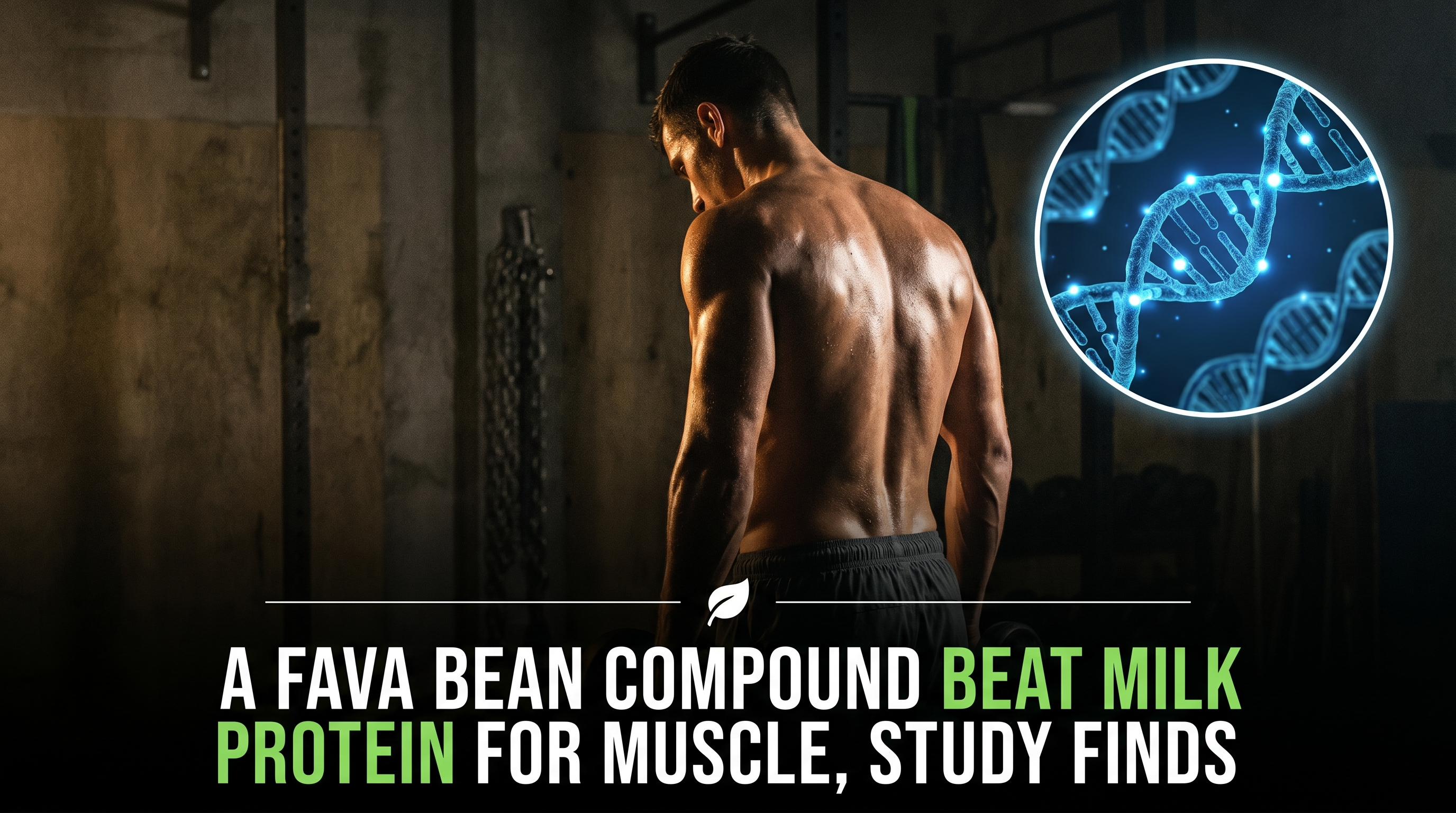
You are doing everything right. The protein is dialed in. You train four or five days a week. You sleep. And yet, eight months in, the mirror has barely moved and your lifts have been parked at the same number since winter. So you do what most serious people do: you buy another supplement. Then another. At some point you add up what you have spent on tubs and capsules that did nothing, and the figure is uncomfortable.
Here is the part nobody selling those tubs will tell you. The reason they failed was not your discipline, and it probably was not your training. It was the product. The natural muscle category is built on four quiet tricks, and once you can see them, you cannot unsee them.
Reason OneWhat you felt was the stimulant, not the muscle.
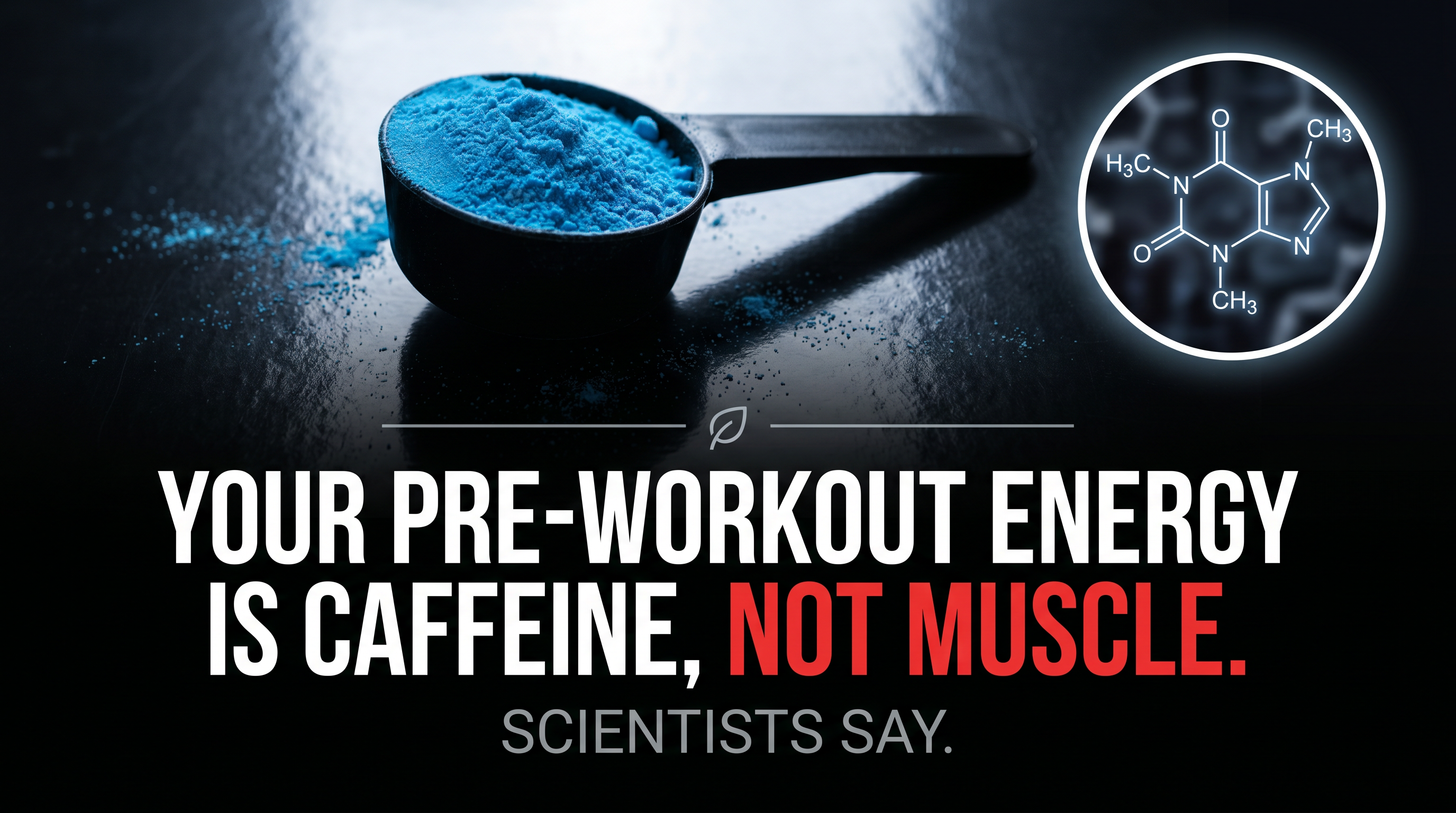
Walk into any supplement shop and the loudest products are the ones that make you feel something within twenty minutes. That sensation is real. It is also caffeine. A pre-workout that spikes you and drops you has done its one job, which is to convince you it is working. The tingle, the rush, the crash at 3pm: none of that is tissue. It is a nervous system on a short loan, and you pay it back every afternoon.
Reason TwoThe label was a crowd, not a formula.
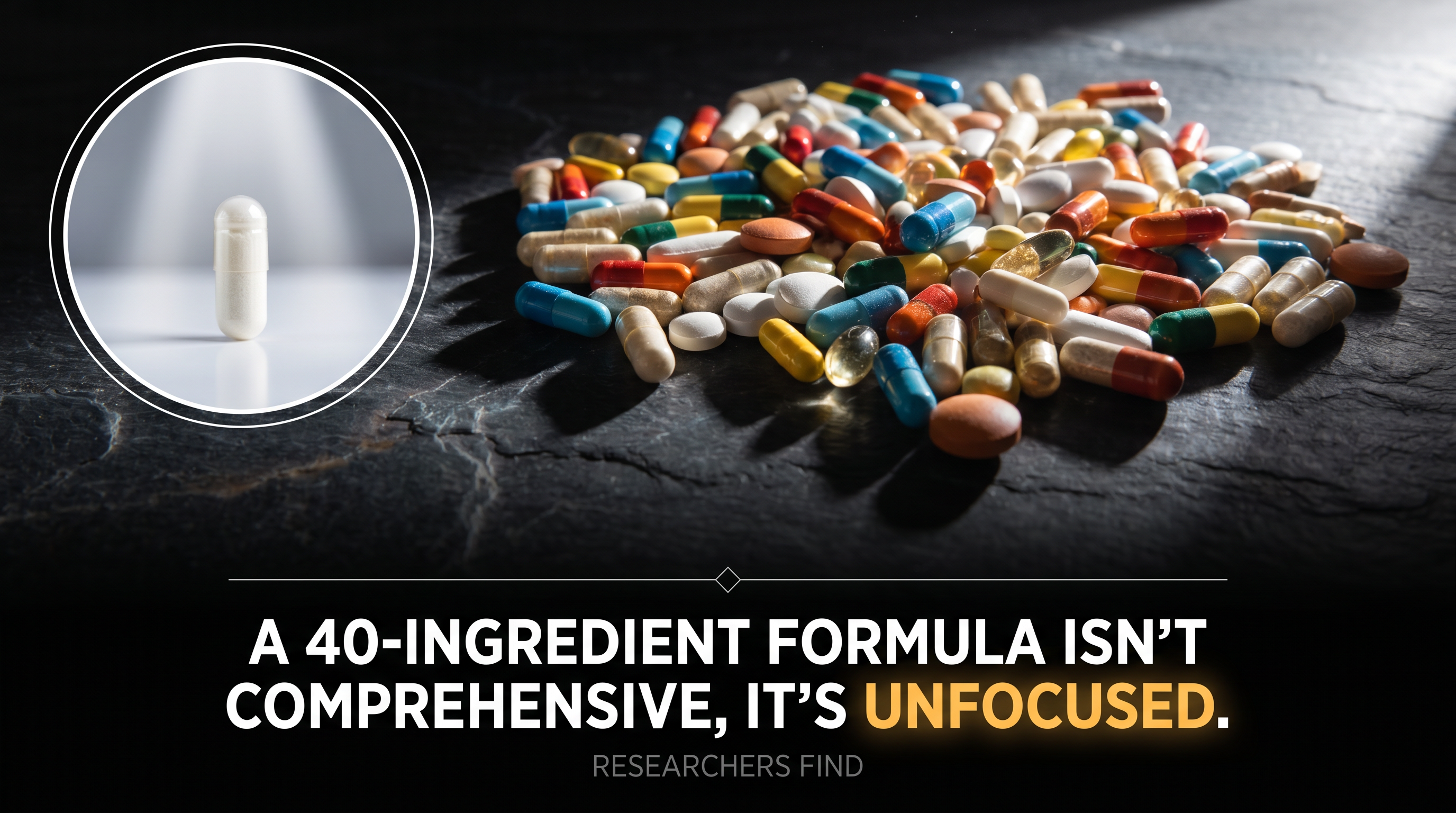
A tub that lists forty ingredients looks generous. It is the opposite. Shelf space on a label is finite, so every name you add means a smaller slice of everything else. A forty ingredient blend is not comprehensive. It is unfocused, and it usually means there is not a meaningful amount of anything that matters in the tub. One active, fully dosed, beats a long list of sprinkles every single time.
Reason ThreeThe dose was a fraction of the one in the research.
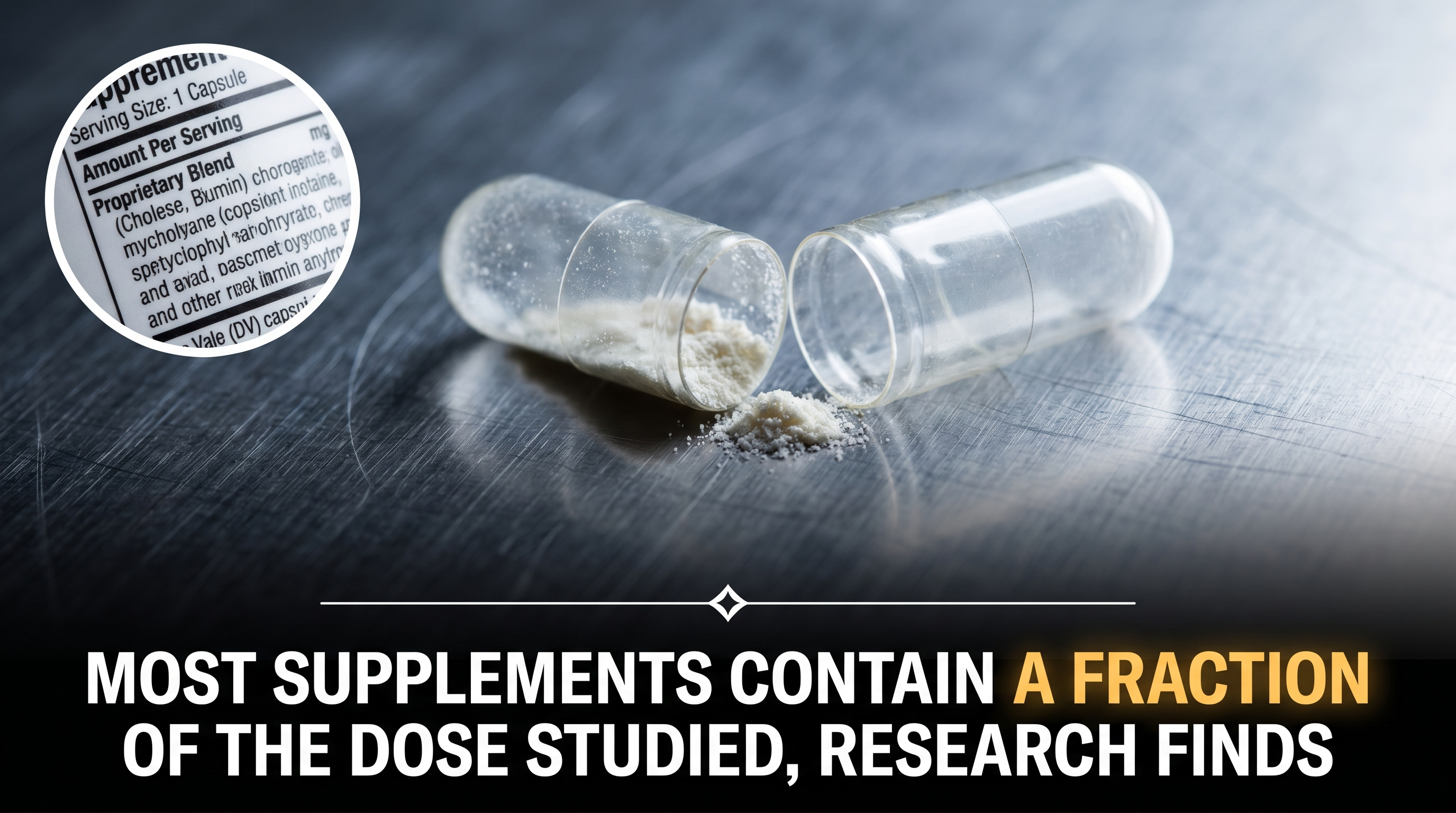
This is the big one. A brand will name an impressive ingredient, point at a study, and then put a tiny fraction of the studied amount in the actual product. Sometimes the real dose is hidden inside a "proprietary blend" so you cannot even check. You cannot match a clinical result with a clinical dose you are not allowed to see. Most supplements contain a fraction of the dose that was actually studied, which is why the study results never show up in your body.
Reason FourThe "miracle compound" rode a single animal study.
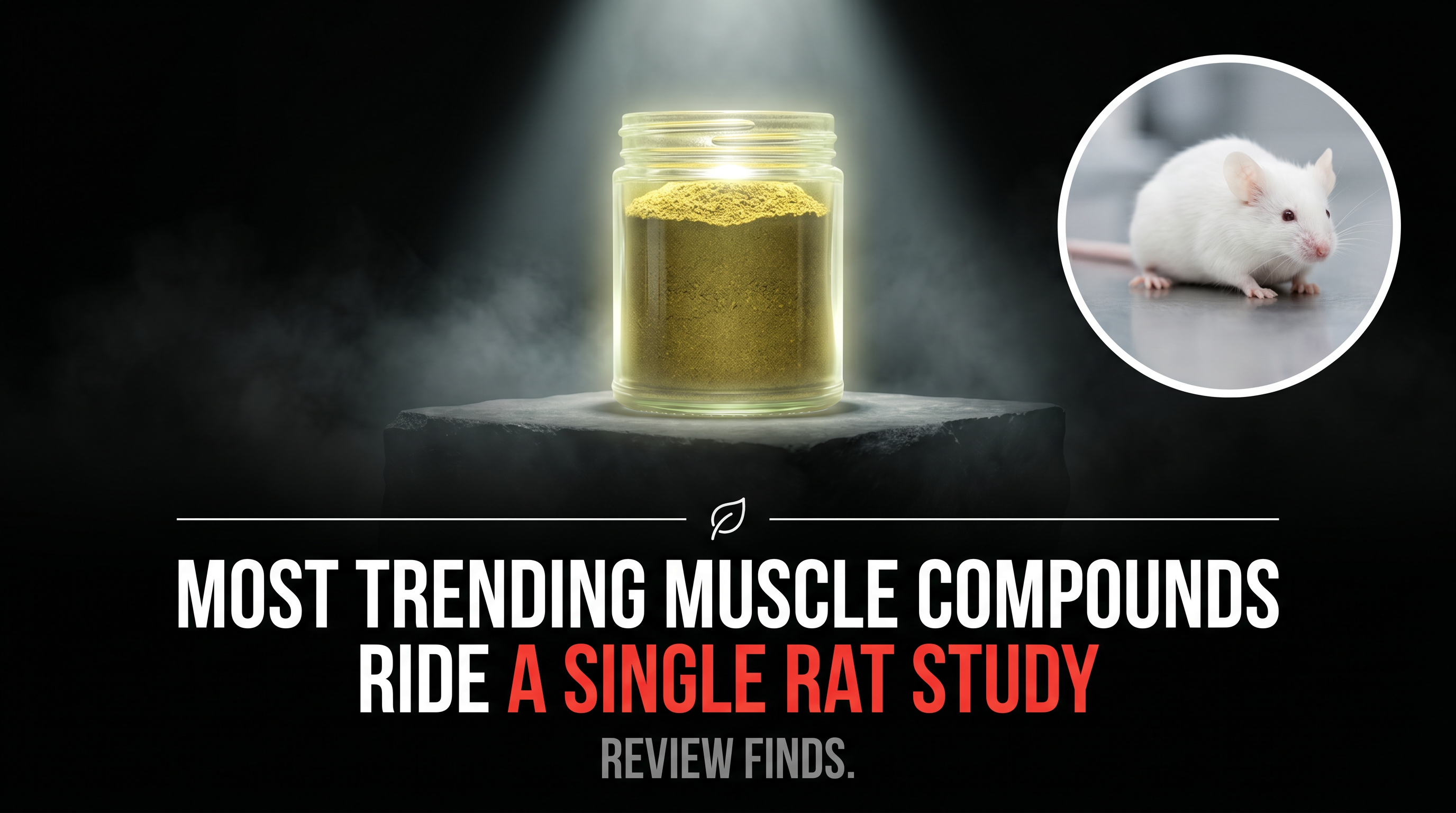
Every year a new exotic compound trends. It sounds cutting edge, it costs a premium, and when you trace the evidence back, it is usually a single rat study and a large marketing budget. Big name, thin proof. Animal data is a starting point, not a finish line, and a result in a rodent is not a promise in a grown adult who lifts.
Once you strip those four tricks away, you are left with one question that actually matters. Not "which ingredient is trending," but "which ingredient was proven to work in humans, at the amount on the label." Building muscle is a signaling process. Your body has to be told to turn protein into tissue, and as that signal gets quieter with age and stress, intake alone stops being enough. The lever is not more protein. It is a stronger signal. And there is exactly one plant compound that was put up against the gold standard, in people, and held its own.
A fava bean compound, discovered by AI, was tested head to head against milk protein in a university trial. It did not just keep up.
Researchers at the University of Maastricht ran a controlled trial, published in The Journal of Nutrition, comparing a bioactive compound isolated from the fava bean against milk protein. For muscle size and strength, the plant compound performed on par with milk protein. But during the recovery window, it produced significantly higher muscle protein synthesis rates than milk protein. The compound was not pulled off a trend list. It was identified by an artificial intelligence platform that scanned plants for the specific signaling sequences your muscle responds to. That is the opposite of a rat study with a marketing budget. That is human data, at a studied dose, on the exact mechanism the four tricks above were distracting you from.
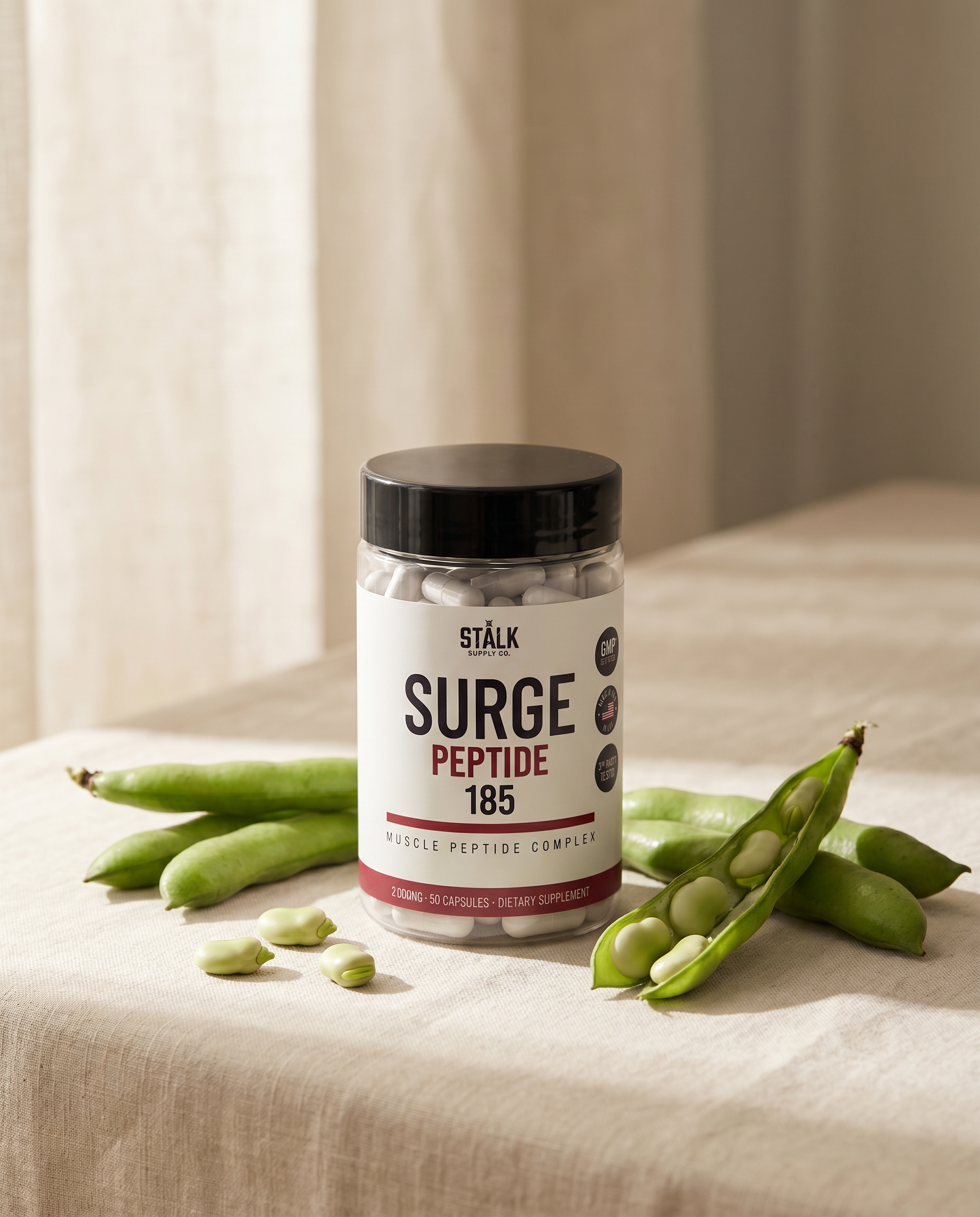
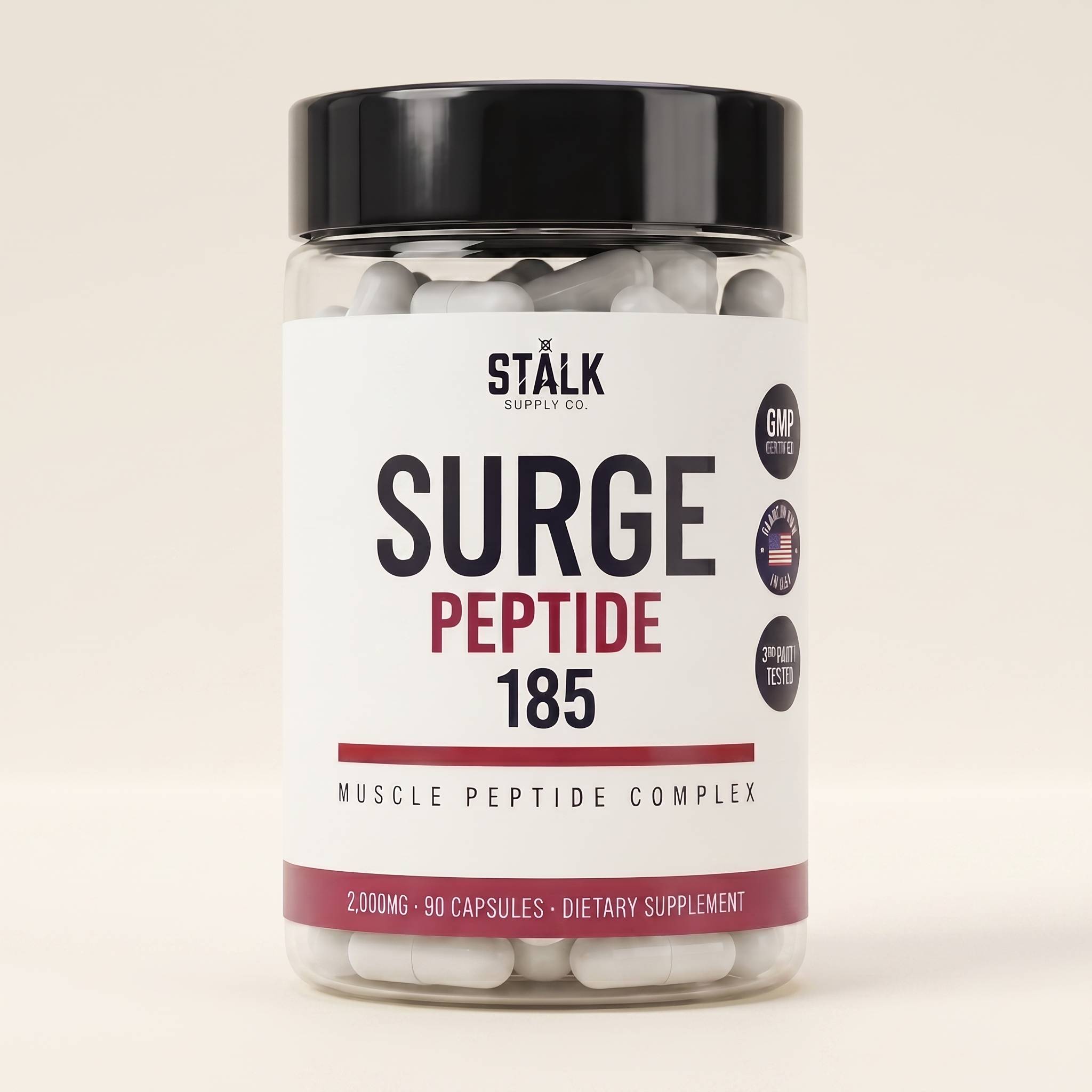
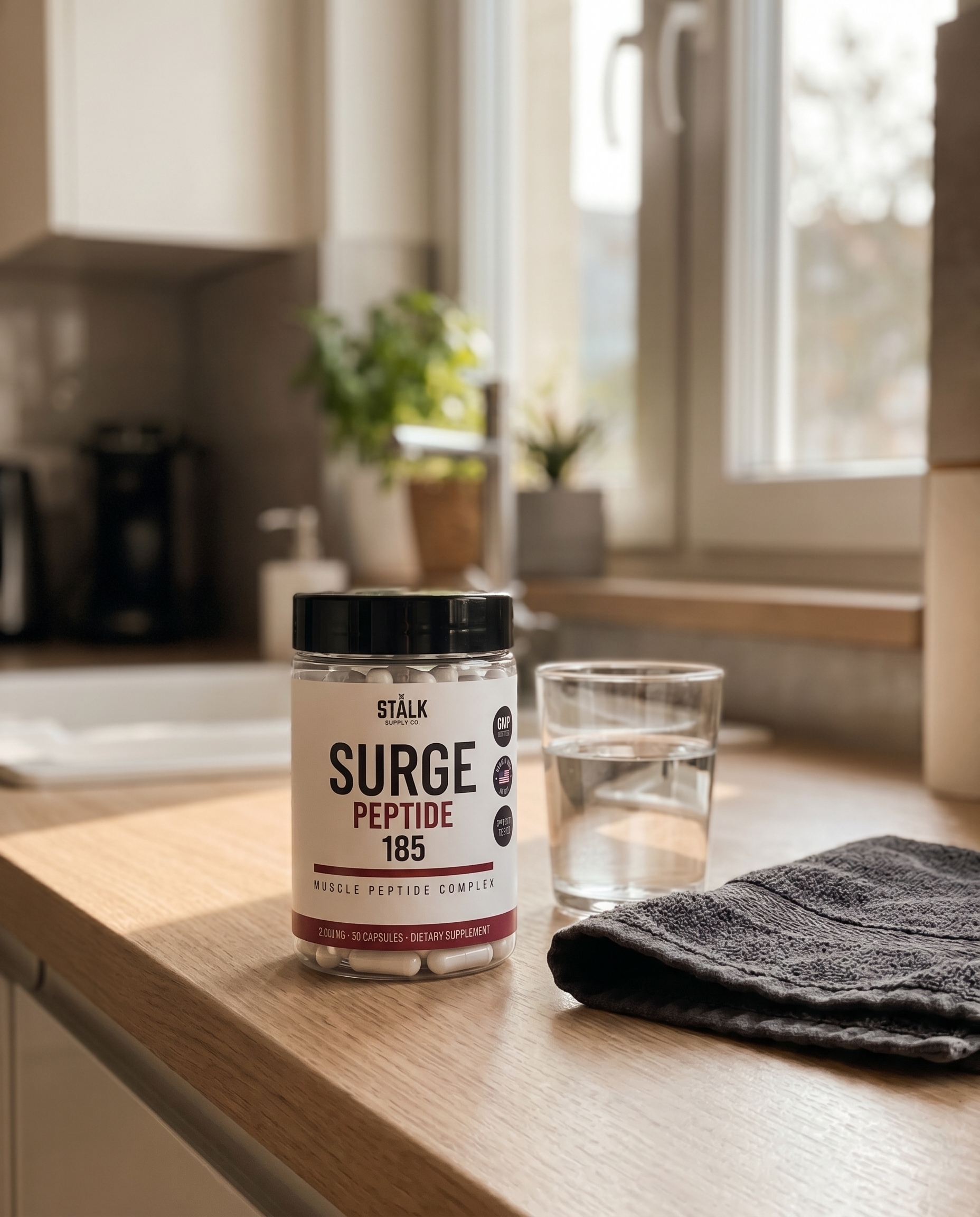
The compound above is what STÅLK built SURGE 185 around.
We will say this plainly, because the four tricks only work in the dark. SURGE 185 is built on the clinically studied fava bean compound as a single focused active, with the dose printed in plain numbers on the label. No proprietary blend. No stimulant smokescreen. No forty ingredient crowd.
- One active, fully visible. The fava bean compound, listed at its amount, not buried in a blend.
- Human trial, not a rodent. Tested against milk protein in people and published in a peer reviewed journal.
- Stimulant free. Nothing in it is designed to make you feel a rush. Built to work, not to buzz.
- Third party tested. Made in a GMP facility and verified by an outside lab.
Sources
Weijzen, M.E.G., et al. "A Vicia faba Peptide Network and Muscle Protein Synthesis Rates During Remobilization in Healthy Young Men." The Journal of Nutrition, 2023. [replace with live citation URL]
Industry analyses of proprietary blends, label transparency, and clinical-versus-label dosing in the dietary supplement category. [replace with live citation URL]